
Albion Commonwealth
Albion presents itself as order and progress while corporate trade and naval force define its presence in Moa Toa.
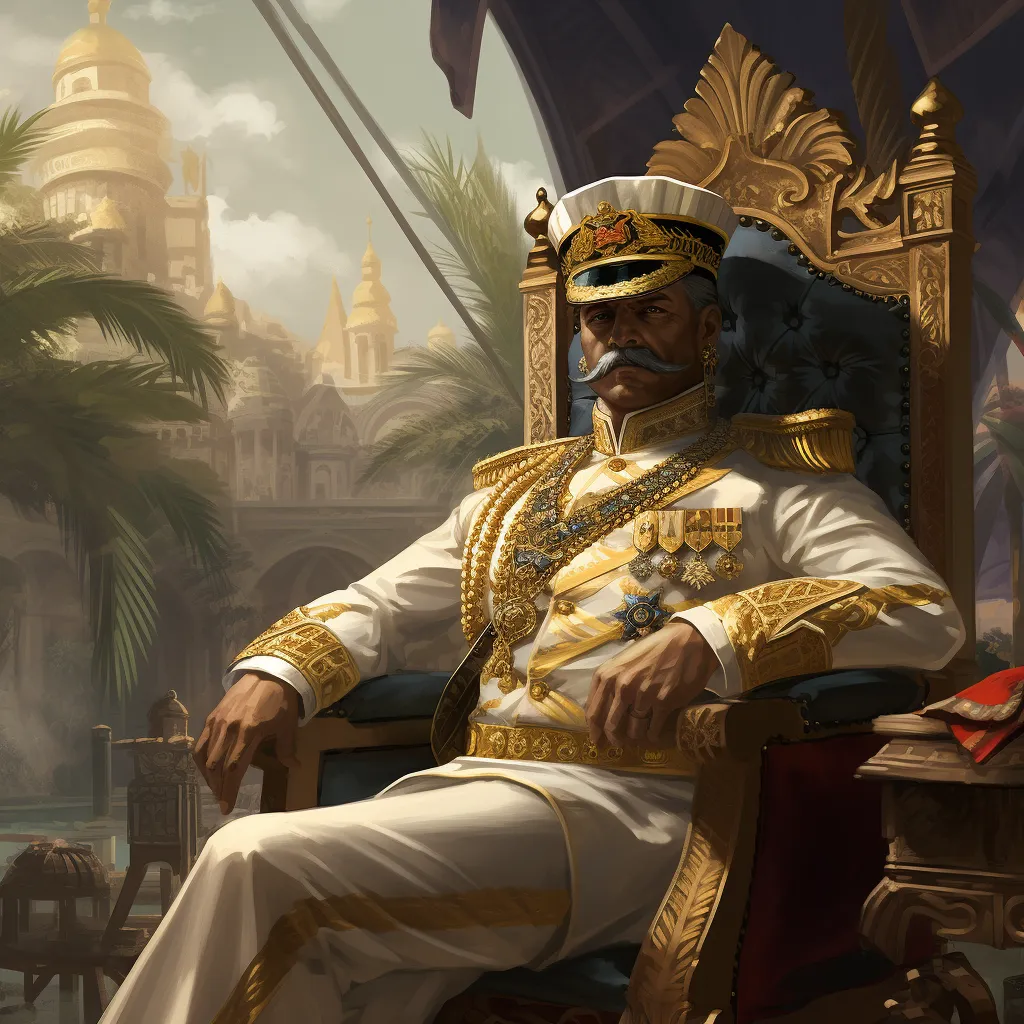
The most prosperous state of the West, it is said the Commonwealth boasts such far-reaching domains that the sun never sets upon it (people who say this have no idea how large Cathay is). Their interests in Moa Toa are represented by the Grand Cathay Trading Company.
Chief exports: wool, firearms, exotic spices from its colonies (e.g. frankincense, myrrh, coffee, tobacco)
The Albion Commonwealth is a vast and labyrinthine entity, having expanded its reach across the western half of the world for centuries. It presents itself as a bastion of order and progress, yet its foundations rest upon a complex and often contradictory system of governance, commerce, and colonial administration.
The Houses of Parliament
Section titled “The Houses of Parliament”At the heart of the Commonwealth lies the Albion Parliament, a nominally democratic body that forms the bedrock of its political identity. In the Home Isles, populated almost exclusively by humans, the right to vote is a cherished principle. However, this principle does not extend easily across the seas. The burgeoning empire contains a myriad of races, from the disciplined, reptilian cohorts of the Saurian Protectorates to the fiercely independent Catfolk clans of the jungles of Kal’aka. For these colonial subjects, parliamentary representation is not a right but a distant privilege. Before a colony may be granted a voice, it must first prove its “worth” by demonstrating decades of loyalty and, more importantly, consistent economic profitability. This ever-shifting standard is a constant source of dissent and internal conflict, seeding rebellion in the very domains that enrich the Commonwealth.
The Unseen Throne of Commerce
Section titled “The Unseen Throne of Commerce”While Parliament debates and deliberates, the true course of the Commonwealth is charted in the boardrooms of its world-spanning corporations. Business interests, chief among them in recent years those of the ascendant Grand Cathay Trading Company, have so deeply entwined themselves with the state that the line between corporate policy and national law has all but vanished. These consortiums dominate Parliament through wealth and influence, ensuring that the interests of trade, not the welfare of the people, dictate the flow of policy. It is often said that the Speaker (of Parliament) proposes, but the Chairman (of the Company) disposes.
The Crown and Sceptre
Section titled “The Crown and Sceptre”Above the fray of politics and commerce sits the Albion Royal House, a mostly defunct line of monarchs with ceremonial powers only. The Crown serves as a symbol of unity and tradition, a living relic of a bygone era before Parliament and the corporations seized true authority. The monarch’s duties are now confined to christening the great ships of the line, bestowing honors upon favored subjects, and presiding over state holidays—a beloved figurehead with no hand upon the true levers of power.
The wealth and expanse of the Commonwealth are supported principally by its naval dominance. Albion boasts the largest and most advanced navy in the west, composed of two arms, the Royal and the Mercantile Auxiliary.
Merchant galleons, such as those of the Grand Cathay Trading Company, are invariably armed to defend against piracy and to project force over local populaces. It is often said Albion has enough such galleons that they themselves constitute a fleet to rival the world’s other navies. In times of war, it is common practice to both draft these ships into combat directly, and to issue letters of marque to authorize privateering.
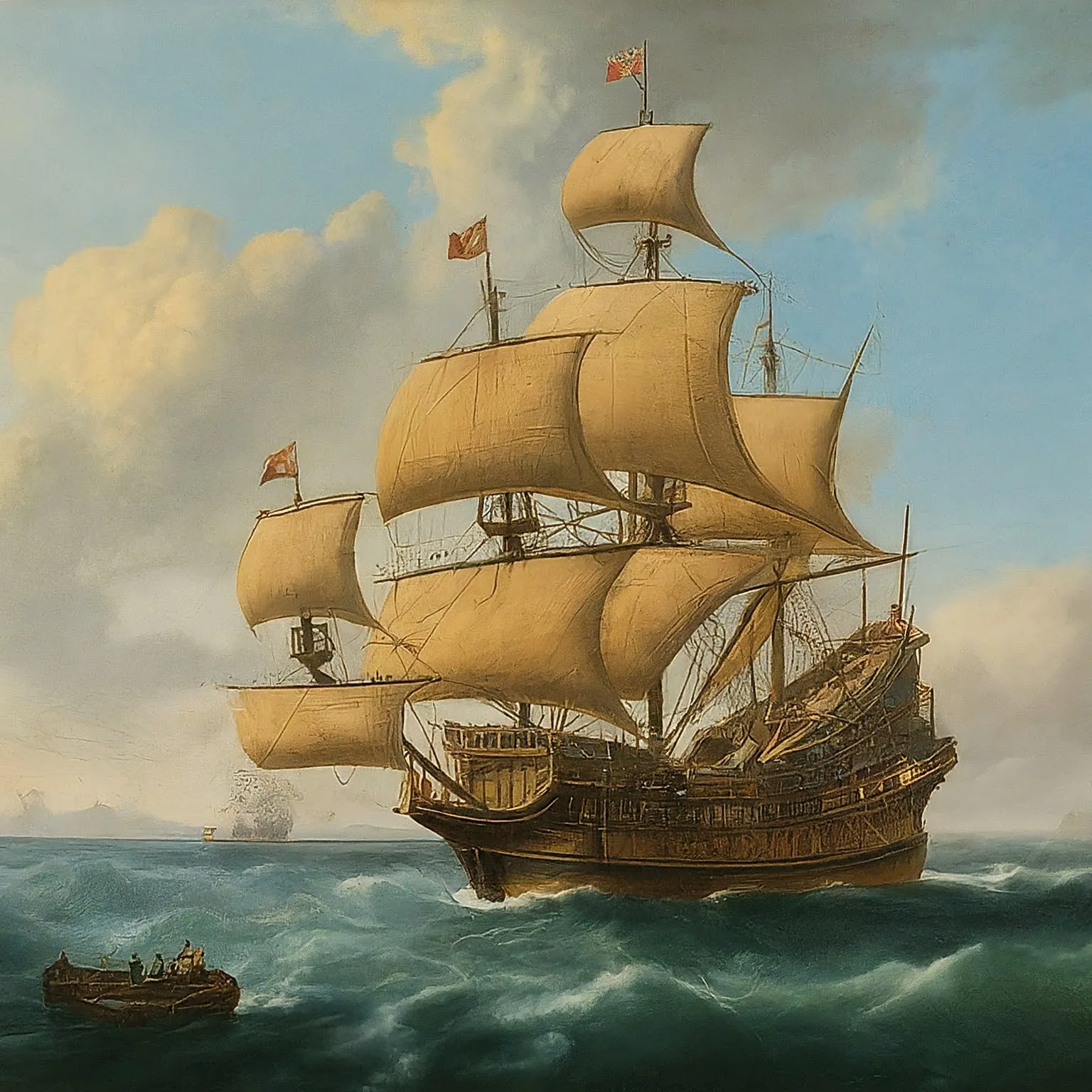
Trading galleon, Grand Cathay Trading Company
The galleons however pale in comparison compared to the professional navy, directly controlled by Parliament. A standard Albion Cruising Squadron, composed of four frigates and a flagship, represents enough power to conquer small cities. These flagships, the fearsome 120-gun Albion ship of the line, are the pinnacles of western naval tradition. While the number of ships in service fluctuates greatly depending on current needs and political stability, at any time Parliament claims authority over no less than 30 such squadrons.
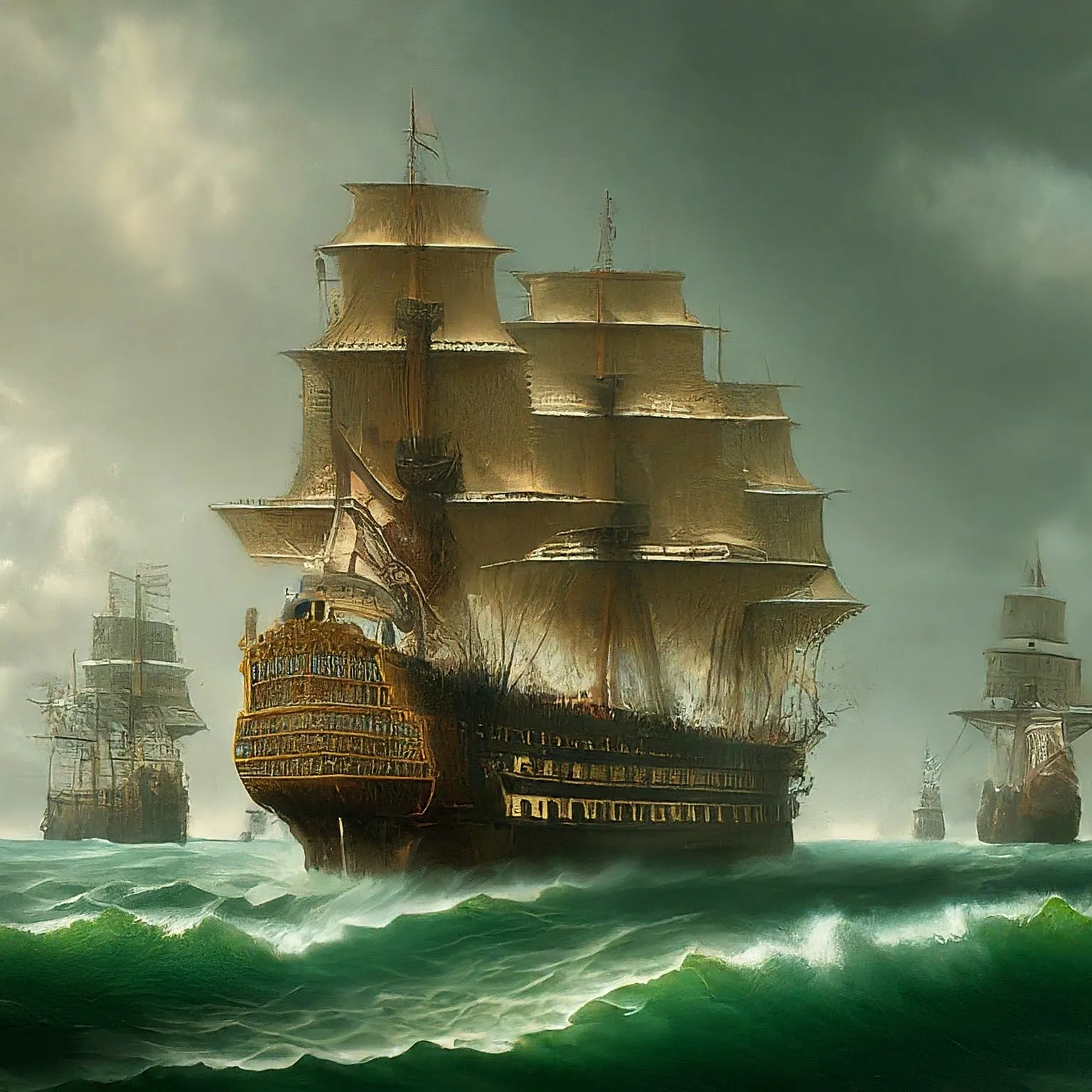
Cruising squadron, with the triple-gun-decked ship of the line in foreground
In the chronicle
Section titled “In the chronicle”- Day 33 — A man with a plan and a modelThe crew founds the Fires of Moa, recruits its first followers, and budgets an audacious ironclad heist.
- Day 32 — Clam ChowderA message hidden beneath a bread bowl reunites the crew with the Lively Lady before Kahu receives a vision wrapped in flame.
- Day 30 — DunmeshiThe crew stalks and kidnaps the Mink, uncovering the revolutionary network behind Pirate’s Cove.
- Day 28 — Light treasonDisavowed by Moa Tor, the crew becomes Albian privateers and accepts Prince Pako’s mission to recover a sacred relic.
- Day 27 — Time to poke the Master BaitersAfter helping capture the ironclad, the crew studies its fire-driven engine and dines with Saint Sebastian.
- Day 26 — My sailorThe Lively Lady serves as bait in a multinational trap for a Cathayan ironclad—and ends up inside the assault.
Show 7 earlier chapters
- Day 25 — The calm after the stormThe rescued migrants return to their fleet, where a celebration becomes the prelude to an international naval operation.
- Day 23 — Trade negotiationsWeapons negotiations with the Ranti expose missing captives and lead the crew into a harpy-haunted swamp.
- Day 18 — BBQA blood-boar victory feast brings grief, trade, Punx’s departure, and urgent news from Oro.
- Day 12 — Day at the zooAlbion’s opera-house envoy introduces the crew to Living Saint Sebastian and his hunt for Don Gregorio.
- Day 11 — Master & CommanderPirates, a storm-damaged ship, and a tense return to Kapikala expand the crew’s view of the foreign powers.
- Day 3 — Voyage to the Elephant IslesCompeting foreign interests converge as the party sails to the Elephant Isles and narrowly survives its first landing.
- Day 1 — The death of MoltyThe campaign begins with Molty’s suspicious death, a hidden cave, and several powers competing for the same secret.