
The Age of Fire
Bartholomeus van Eisenberg named the era. The crew is now living inside every fault line he described—and creating a new one of its own.
Brewing Conflict in the Age of Fire
Section titled “Brewing Conflict in the Age of Fire”The philosopher and polymath Bartholomeus van Eisenberg wrote an account about the geopolitical situation of the world, entitled Philosophy of Fire, in which he dubs the current era “the Age of Fire.” Upon publication in Varangia, the book saw widespread circulation in the West, and copies of various translations are now appearing even in the Isles. What follows are summarized snippets of the various issues raised by Bartholomeus in his in-universe tome, with some additional facts he would not have been privy to.
Note: as a Varangian, Bartholomeus may have been biased to put more weight on certain aspects over others.
Cathayan chokehold
Section titled “Cathayan chokehold”Ever since the opening of the Tradeway over a century ago, people of the West have discovered an insatiable desire for eastern products, predominantly in the form of porcelain, silk, tea, and spices. These are all things Celestial Cathay could produce in abundance and for perpetuity. Meanwhile, the East has shown little interest in western produce, save for the dragons’ inherent lust for precious metals and gems. This has led to rampant inflation and debasement of coinage in the West, with the peasantry suffering the most.
Bartholomeus likens this to Cathay as a giant slowly strangling the life from the western powers. He believes war with the East is eventually unavoidable, and many are coming to agree with this view despite the overwhelming firepower on display from the Celestial Empire.
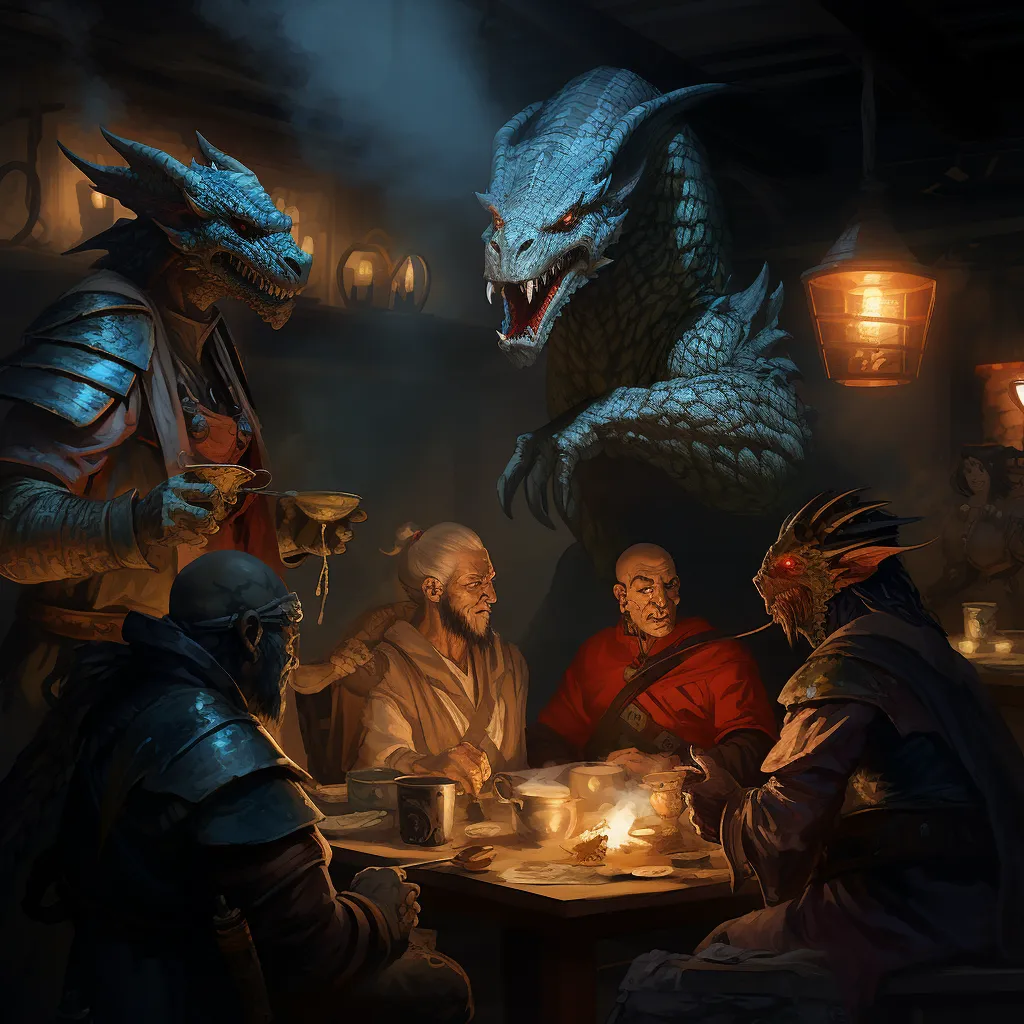
Caricature of Celestials strong-arming western merchants
Crumbling alliances
Section titled “Crumbling alliances”In order to maintain some leverage against the might of Cathay, the western powers were united from the outset in the Consortium of Trade. Negotiating as a block, the Consortium was able to force some favorable deals in the past, including the opening of the Free Ports in Moa Tor, and obtaining the right to deal with Cathayan merchants on an individual basis (something the Emperor was loath to allow). This was undoubtedly a boon to every western nation.
However, times are changing, and Varangia in particular is quickly feeling like it drew the short end of the deal. As the most fractured power with the least amount of trade goods to offer, Varangian merchants are increasingly losing wealth and status to other competitors, and the Consortium has made no effort to correct this.
As a result, increasing amounts of Varangian ships are turning from mercantilism to smuggling and outright piracy. In some parts of Moa Toa, the word “Varang” is becoming synonymous with pirate. Of course, with other nations being targeted by this piracy, the western coalition is beginning to fray.
Bartholomeus puts particular emphasis on this problem (devoting long and ponderous chapters to it, he seems less offended by his kinsmen’s piracy than their tolerance for all races and nationalities to join the pirate crew, unwittingly introducing sailing and naval warfare to the Islanders). He believes the solution will be found in wartime, when Varangian naval traditions and artillery will find much greater worth.
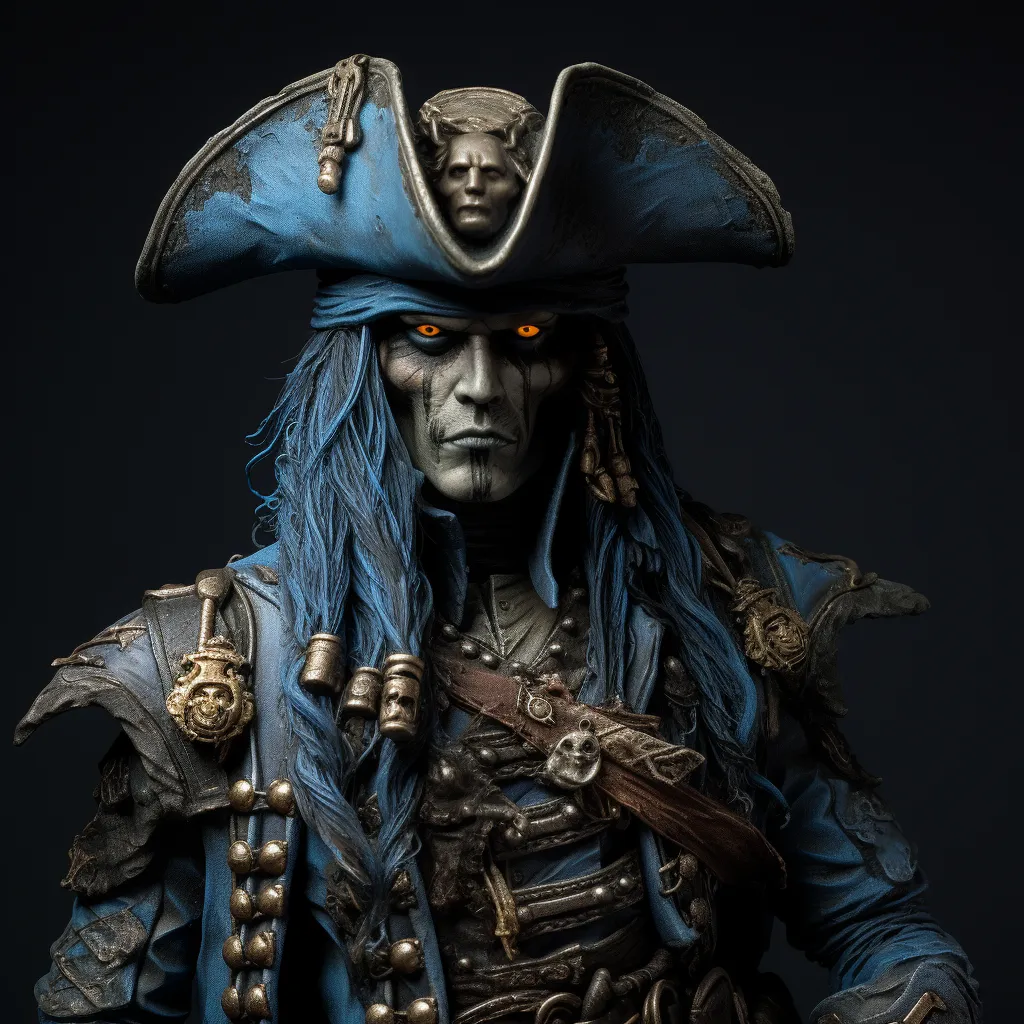
A Sylari islander serving as an officer on a Varangian pirate ship
Moaan identity
Section titled “Moaan identity”The islands of Moa Toa presented little challenge or interest to the Powers initially. It served, most of all, as a buffer zone and trading ground between West and East. But now, over a century after initial contact, the islanders have become more assertive.
This is not the effect of a single movement or group of people, and their demands are often contradictory. The establishment, the monarchy of Moa Tor, continues to appease the outsiders while slowly trying to negotiate for more recognition and equality. Meanwhile, there are much more extreme factions vying to either immediately seize the spoils of international trade or to instead drive all foreigners away and return to a simpler and more isolated existence.
Bartholomeus recognizes that it is in the best interests of the West to forestall confrontation by playing these powers against each other, but predicts Moa Tor will eventually fall and with it any hopes for peace in the Isles.
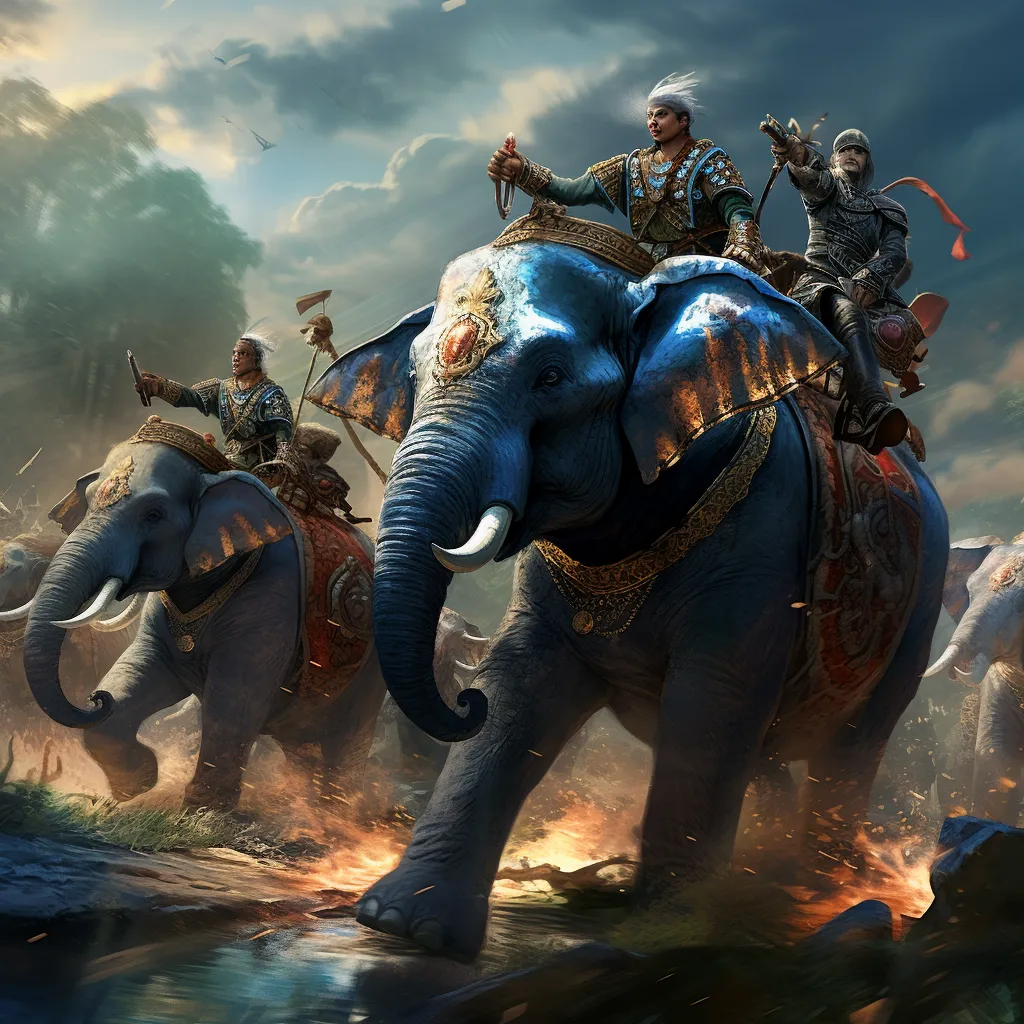
Calvary native to the Elephant Isles, which are presently outside the control of Moa Tor
Technology and reactionism
Section titled “Technology and reactionism”Few who live in this age can fail to spot the ever growing pace of technological advancement, even disregarding the utterly unrecognizable wonders of the East. Technological growth has a very disruptive effect, especially since it is well known that neither divine nor arcane magic plays well with its development. Fortunately for the West, no dominant nation is an actual magocracy, and even Carolingia, the Ecclesiastical Republic, is really ruled by a liturgical bureaucracy rather than by its spellcasters. Nevertheless, there are plenty in power who wield powerful magic and feel threatened, or are otherwise perturbed by the changing tides.
Meanwhile, rapid technological progress was built on top of Kineticists and other wielders of raw elements. But this has also been incredibly lopsided. The Windbinders of Varangia single handedly spearheaded the Age of Sail and allowed the west to colonize almost the entire known world, and the power of Air has ever since been dominant in prestige in the West. However, those who have been studying Cathay have discovered they are utilizing Fire in fantastic ways in shipbuilding, industry, and weaponry. Demand for Fire Kineticists is quickly reaching an all-time high.
This is admittedly an area that Bartholomeus knows less about. He is not even aware of regions or times that were dominated by elementalists of Water (such as in the nomadic hordes of the Endless Expanse) or of Earth (such as in the fallen Alt’Sylari or Sea-Elven empire of Kikiloa that once ruled the Isles). But he has identified that shift in power is another destabilizing force in the world.
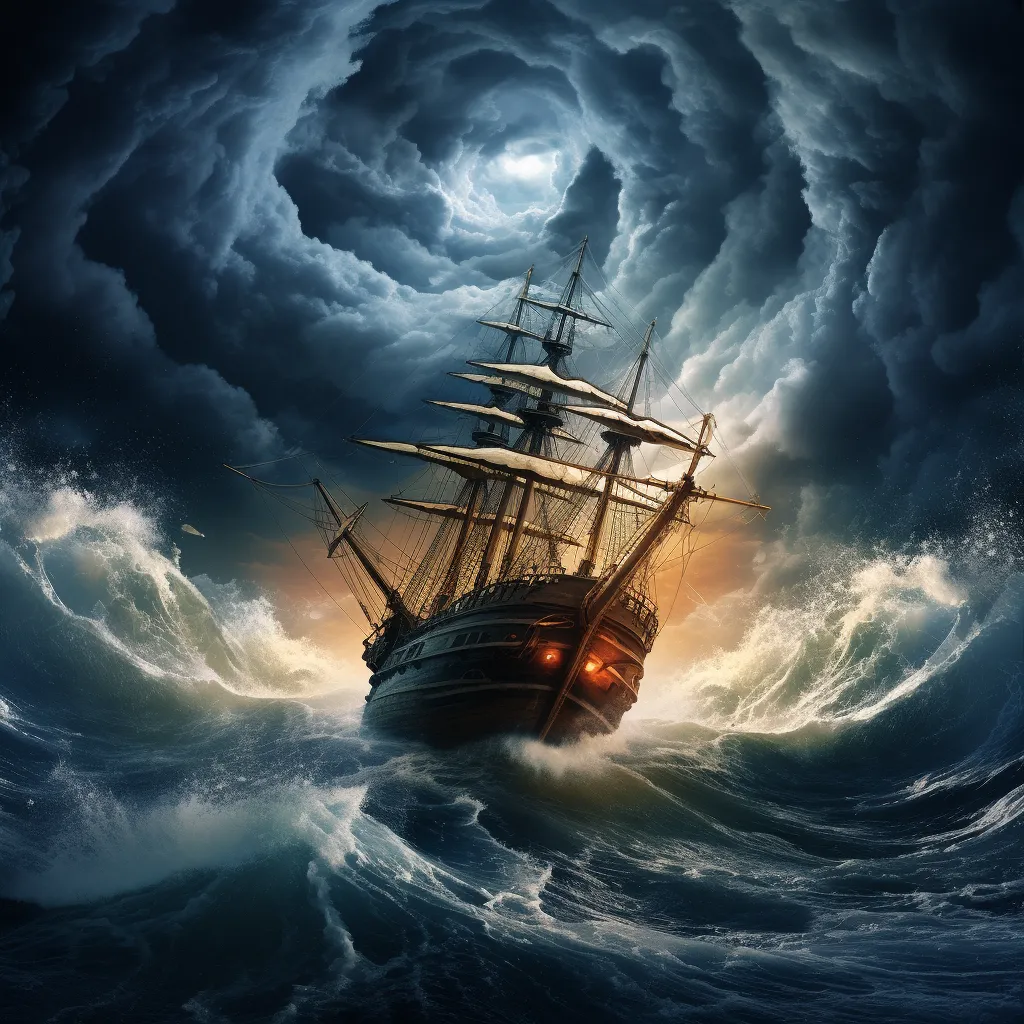
A ship navigating through the Maelstorm with the help of Windbinders
Mandate of Heaven
Section titled “Mandate of Heaven”This section does not appear at all in Bartholomeus’ book as he has no understanding of the internal workings of Cathay, but we add it here for completion. Dynastic succession had been a given fact for millenia in Cathay between the Nine Divines (dragon emperors of various breeds). The reigning emperor, Wu Di (of the Golden Lineage of Fire), usurped that order by refusing to step down for the presumed heir, Di Li (of the Steel Lineage of Earth), and had in fact imprisoned the other Divines.
So far, the people of Cathay have been either placated or cowed by the inexplicable technologies Wu Di has managed to introduce. But tradition runs deep in the veins of dragons, and every year of unwarranted reign sees more discontent and grumbling about the Emperor.
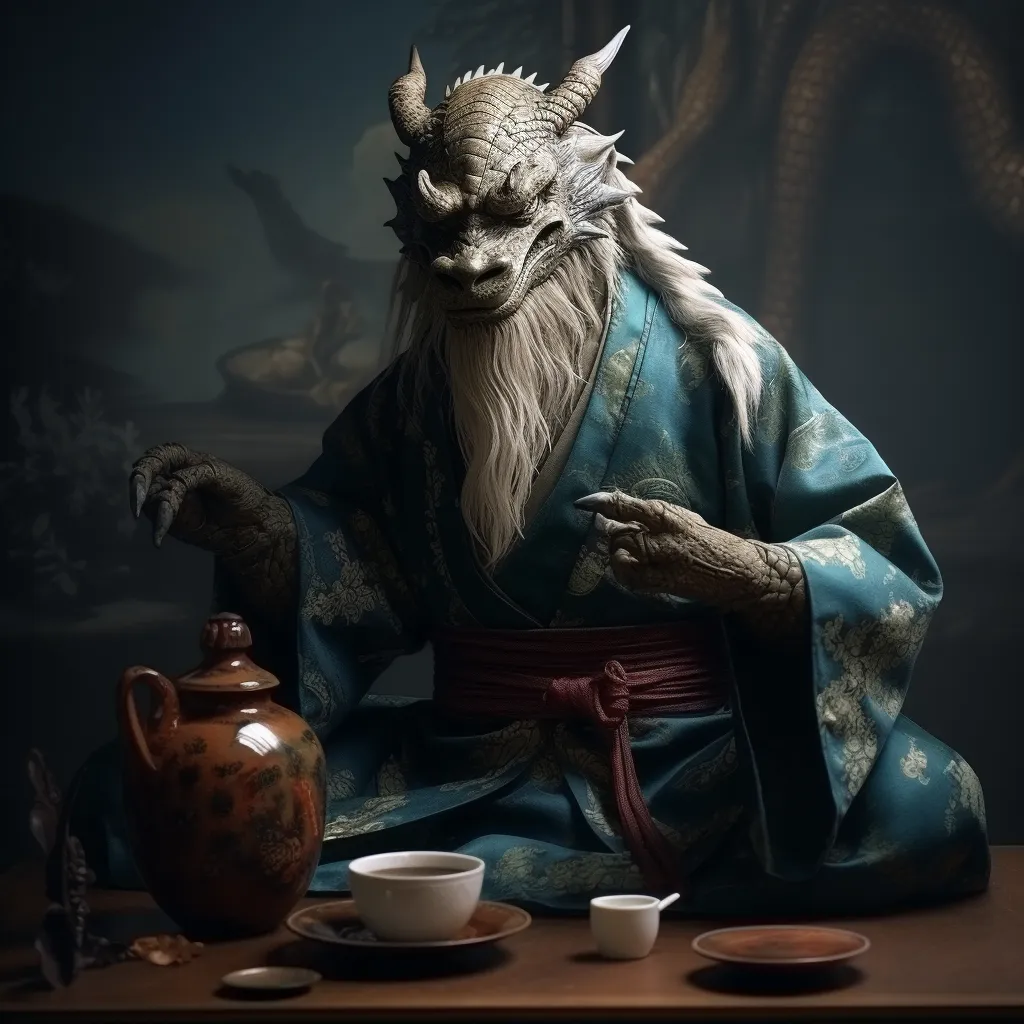
Cathayan tea house, a traditional venue to exchange news and political ideas
Philosophy of Fire
Section titled “Philosophy of Fire”The Church of the West worships the Eternal Flame, yet are considered almost like savage children by Celestials in how they wield fire. Meanwhile, the Empire’s usual dynastic cycle has ground to a halt, also unnaturally paused upon the reign of Fire. As for Moa Toa, the Islanders are extremely diverse and polytheistic, but almost all of them pay special heed to the Volcano Old Moa as the center or founder of their pantheon. Is this significance of fire in every culture mere coincidence?
In any case, these ready parallels have led to many efforts at both religious and cultural assimilation and syncretism. But to the powers that be, these efforts are invariably treated as subversive and heretical. For instance, the Church would not for one moment relinquish its central authority to a distant mountain or dragon. If anything, religious intolerance is on the rise everywhere, and fervor in the Church, which had been waning ever since it unified the entire West, is again kindled.
Bartholomeus believes this is the central tension of the age, and will grow to encompass all the aforementioned conflicts, inevitably resulting in a cataclysm that envelops the known world.
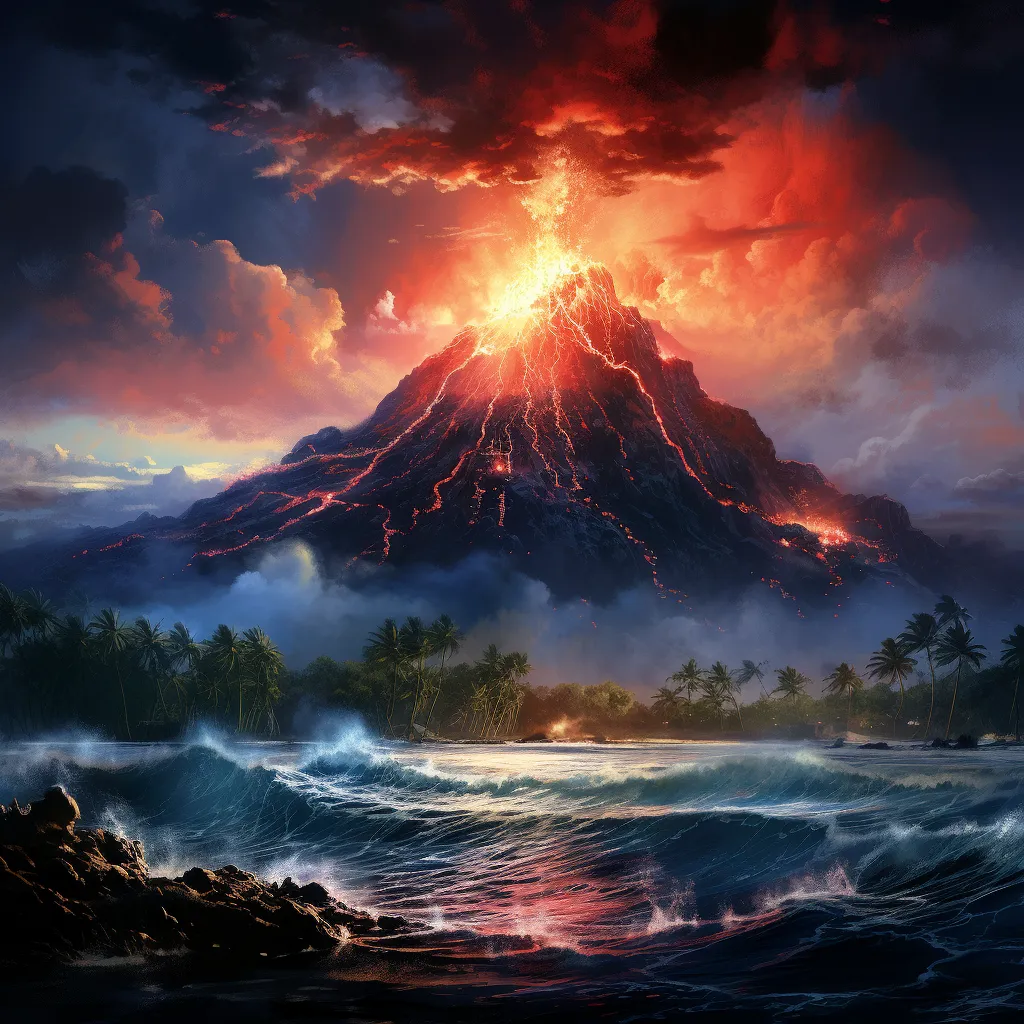
Old Moa erupting
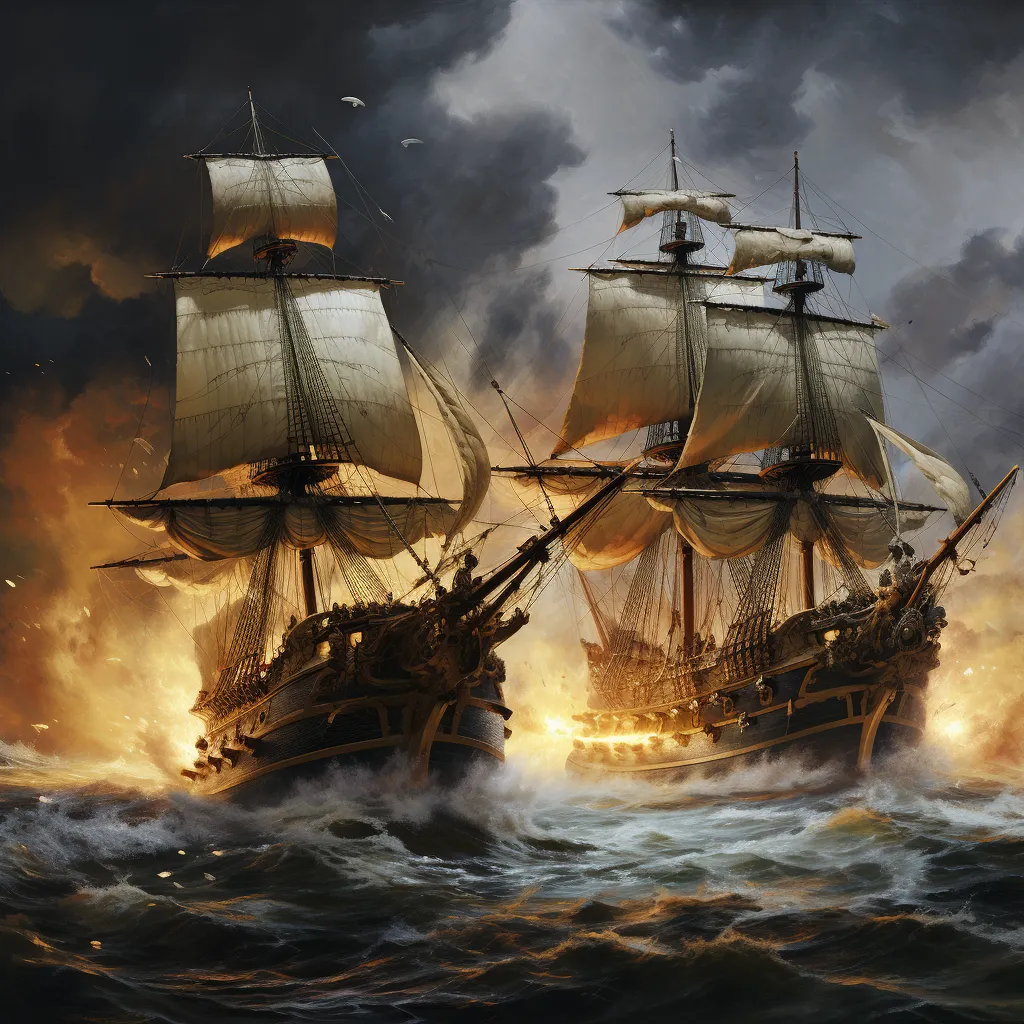
Men-of-wars exchanging broadsides. Could Mooans have such vessels of their own one day?
In the chronicle
Section titled “In the chronicle”- Day 34 — Plan A, B and C?The crew boards the Celestial ironclad in barrels and invisibility potions, and Himbothy is fire-kissed in the engine room.
- Day 33 — A man with a plan and a modelThe crew founds the Fires of Moa, recruits its first followers, and budgets an audacious ironclad heist.
- Day 32 — Clam ChowderA message hidden beneath a bread bowl reunites the crew with the Lively Lady before Kahu receives a vision wrapped in flame.
- Day 31 — Liar’s diceLiar’s dice, a revolutionary cave, and the theft of an everlasting fire from Pirate’s Cove.
- Day 30 — DunmeshiThe crew stalks and kidnaps the Mink, uncovering the revolutionary network behind Pirate’s Cove.
- Day 28 — Light treasonDisavowed by Moa Tor, the crew becomes Albian privateers and accepts Prince Pako’s mission to recover a sacred relic.
Show 19 earlier chapters
- Day 27 — Time to poke the Master BaitersAfter helping capture the ironclad, the crew studies its fire-driven engine and dines with Saint Sebastian.
- Day 26 — My sailorThe Lively Lady serves as bait in a multinational trap for a Cathayan ironclad—and ends up inside the assault.
- Day 24 — Ambush at the camp!A rescue camp is overrun by enchanted survivors, singing harpies, and hungry rocs in a desperate swamp battle.
- Day 23 — Trade negotiationsWeapons negotiations with the Ranti expose missing captives and lead the crew into a harpy-haunted swamp.
- Day 22 — Succulent Chinese mealAt Serpent’s Repose, the crew bargains with E’longa for captives taken to the Great Nest.
- Day 21 — MementoThe crew reunites Kahu with the Migrant Fleet, confronts a Cathayan inspection, and learns of the Ranti slave trade.
- Day 20 — This girl is on fireA burning amnesiac awakens as Kahu while Carolingia prepares to send three Living Saints into the Isles.
- Day 19 — Oro approaches usThe crew destroys Johan Storzenbecher’s slaving ship and finds a tattooed survivor burning on the shore.
- Day 18 — BBQA blood-boar victory feast brings grief, trade, Punx’s departure, and urgent news from Oro.
- Day 16 — Not a haikuTrade, politics, and the consequences of imperial entanglement give way to the villages’ sacred Culling.
- Day 15 — Diplomatic incidentThe investigation into Saint Sebastian’s death collides with local politics as the boggarts bring catastrophic news.
- Day 14 — Who dunnit?A voyage with the Contessa and Saint Sebastian becomes a murder mystery with dangerous religious implications.
- Day 12 — Day at the zooAlbion’s opera-house envoy introduces the crew to Living Saint Sebastian and his hunt for Don Gregorio.
- Day 11 — Master & CommanderPirates, a storm-damaged ship, and a tense return to Kapikala expand the crew’s view of the foreign powers.
- Day 10 — BoomerangAfter returning Bloombark’s children, the crew departs into a storm that leaves their ship lost and damaged.
- Day 9 — MihfThe infiltration of Utu ends in battle, sacrifice, and the liberation of the kidnapped children.
- Day 8 — Trojan boxesHidden inside Trojan crates, the crew infiltrates the boggart village and reaches its central ceremony.
- Day 4 — The Doom of the BunyipsAfter surviving the bunyips, the expedition reaches Bloombark and meets Queen Killipella and Don Gregorio.
- Day 3 — Voyage to the Elephant IslesCompeting foreign interests converge as the party sails to the Elephant Isles and narrowly survives its first landing.